
In North Iceland, you can travel around the area and get to know historical places, whether it is related to settlement, battles, poets, or the way of life of the past.
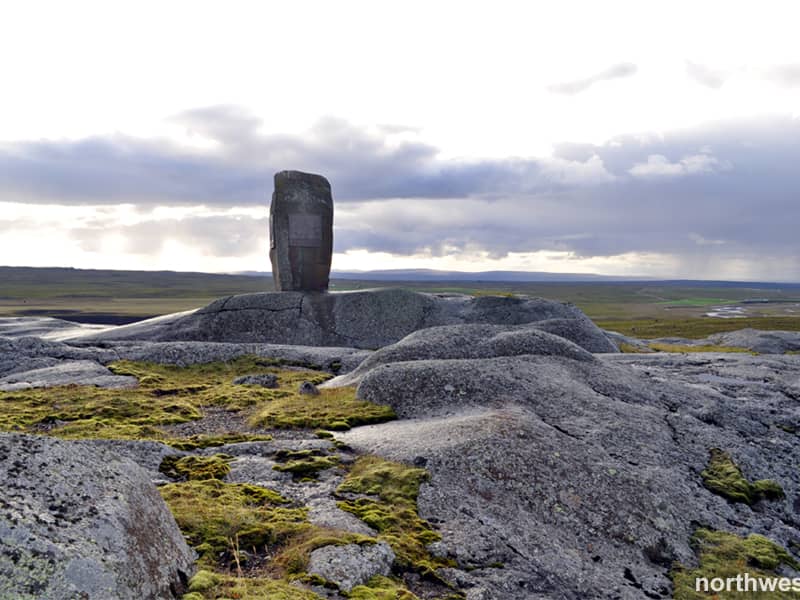
Bjarg í Miðfirði
Bjarg in Midfjordur, is the farm that belonged to Asdis, the mother of outlaw Grettir Asmundarson - Grettir the Strong, of Grettis Saga fame. Beneath a rock in the hayfield, Asdis buried Gretti´s head, which was presented to her by his killer. There´s now a monument in her honour on site.
View
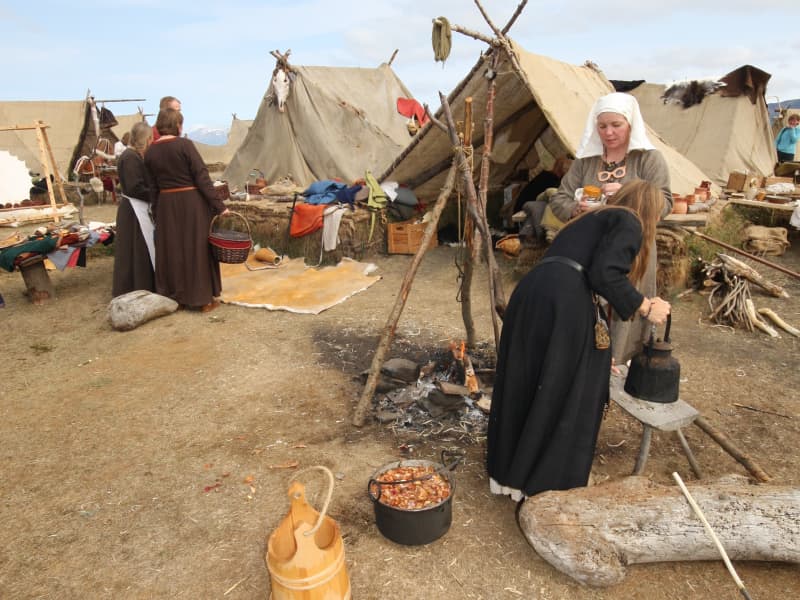
Gasir - Medival Trading place
Gásir is a unique place. In no other place in Iceland is it possible to find so many remainings from a trading post from the Middle Ages. Gásir was the main trading post in northern Iceland during the Middle Ages, and the place is mentioned many times in Old Icelandic Sagas from the 13th and 14th centuries. Archaeological digging in the area during the last six years has shown that it was a trading post up to the 16th century, possibly until trading started in Akureyri.
View
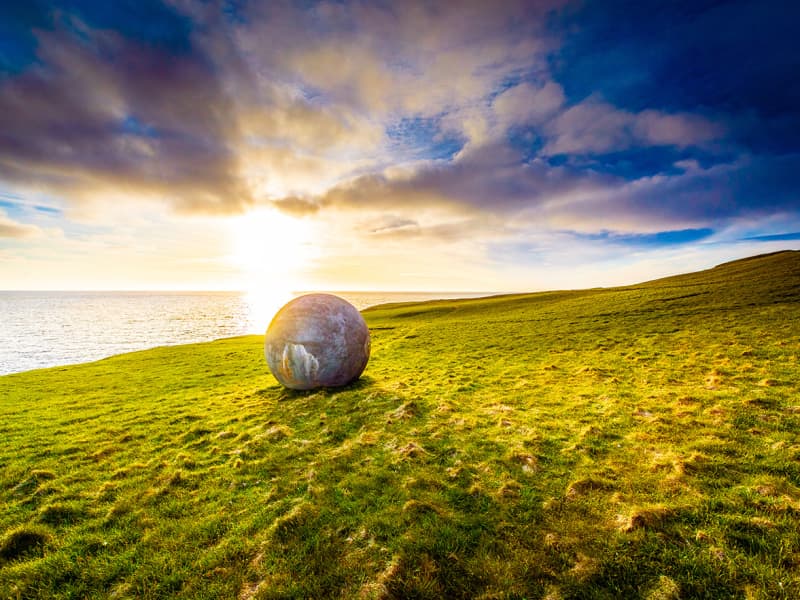
Orbis et Globus
Orbis et Globus is a striking artwork located on Grímsey, Iceland’s northernmost inhabited island. Unveiled in 2017, the three-metre sphere marks the Arctic Circle and serves as a symbol of the unique relationship between the island and the changing geography of the far north.
As the Arctic Circle gradually shifts northwards due to changes in the Earth’s axial tilt, the artwork is periodically moved to reflect its current position. This makes Orbis et Globus not only a landmark, but also a living reminder of the dynamic nature of our planet.
For many visitors, reaching the sphere is one of the highlights of a visit to Grímsey. The walk across the island offers beautiful views of the surrounding landscape, abundant birdlife and the opportunity to stand on, and step across the Arctic Circle itself.
Designed by artist Kristinn E. Hrafnsson in collaboration with Studio Grandi, Orbis et Globus has become one of the island’s most recognisable landmarks and an enduring symbol of Grímsey’s connection to the Arctic.
View
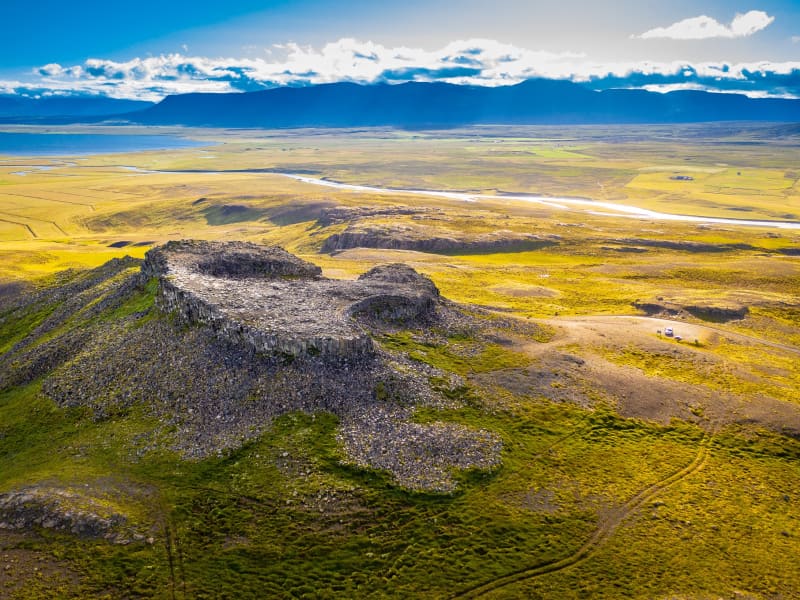
Borgarvirki
Borgarvirki is a 10-15 metre high ridge of columnar rock. This phenomenon is a volcanic plug, and there is speculation as to whether it was, in ancient times, a district fortress and even, perhaps, a battleground.From Borgarvirki there is a wide panoramic view over a large part of the region and a viewfinder is in place to help locate some of the important landmarks.This is truly a unique natural phenomenon, but one which has also seen some improvements by the hand of man in bygone days.
View
First settlers
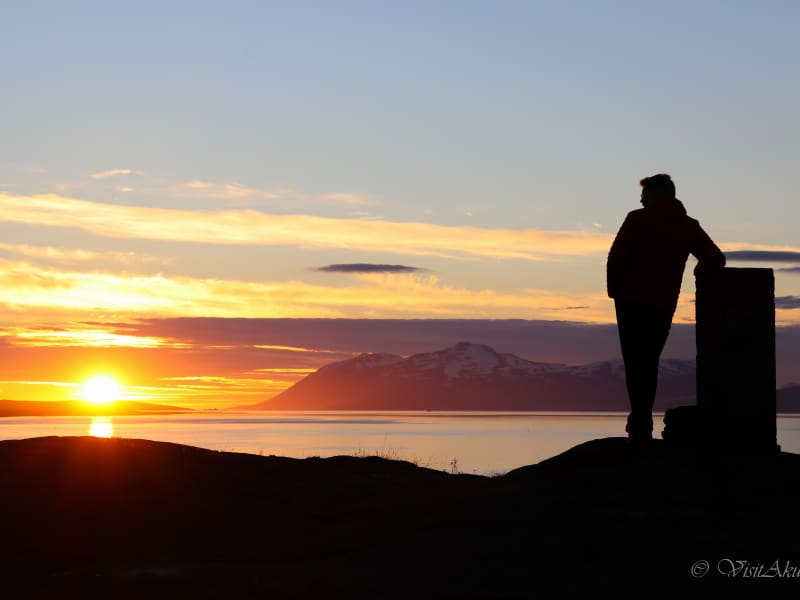
A statue of Helgi magri (Helgi the lean)and Þórunn hyrna (Þórunn the horned), the first settlers of thearea, about the year 890, stands on the Hamarkot Rocks on the streetBrekkugata near the police station.
The story tells that the parents ofHelgi handed him over for fostering into the Hebrides, and when they came theretwo winters afterwards, he was so starved that they did not know him; theybrought him away with them and called him Helgi the lean. He was brought up inIreland, and when he was grown up, he married Þórunn hyrna (Þórunn the horned).They moved to Iceland with their children and settled the whole of Eyjafjörður.Helgi magri handed out parts of the settlement, which was very big, to hischildren and kin but selected and built his own farm at a site which henamed Kristnes (Christ Cape) some 12 km south of Akureyri, a place where hedwelt during the remainder of his life. Helgi believed in Christ and thereforegave this name to his dwelling.Þórunn hyrna, was thedaughter of Ketill flatnefur. Ketill Björnsson, nicknamed Flatnose (Flatnefur), whowas a chieftain of the Isles of the 9th century. All his childrensettled big parts of Iceland, Þórunn hyrna in Eyjafjörður, Auður djúpúðga, at Hvammur in West-Iceland.Her brother, Helgi bjóla, settled Kjalarnes and her other brother, Björnaustræni, settled Snæfellsnes and lived in Bjarnarhöfn.The statue, which was made by Jónas S. Jakobsson in 1956, is located on top ofHamarkotsklappir behind the Police station (Lögreglustöðin). About 5-10min. walk from town center.
Two prominent streets in Akureyri arenamed after these settlers - Helgamagrastræti street and Þórunnarstræti streetand the kindergarten Hólmasól is named after Helgi and Þórunn first child(daughter) Next to the statue, one can find an old view-dial. On the view-dial iswritten 1949 - Ferðafélag Akureyrar, but these view-dials show the names of thesurrounding mountains.
View
Þingeyrakirkja church
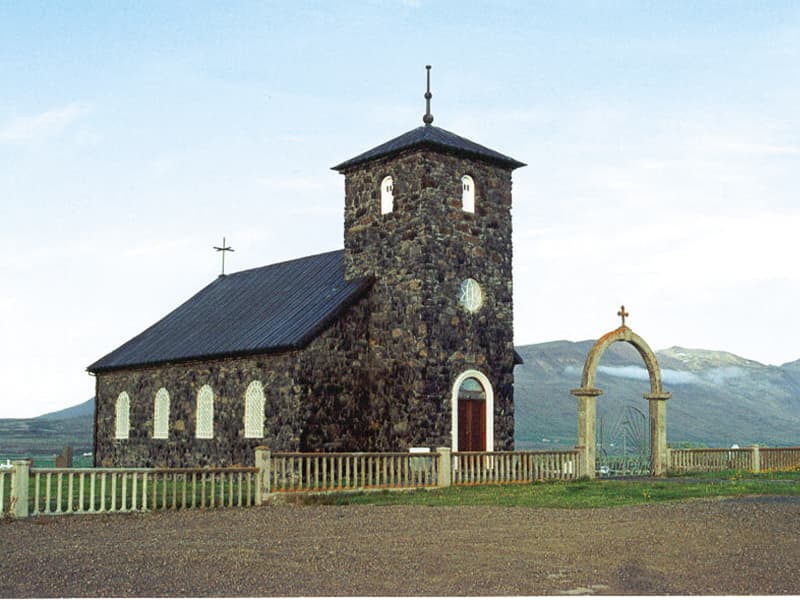
Þingeyrar was, in past times, one of the most famous estates in Húnaþing and also the site of a church. Now, the Þingeyrakirkja church commands one of the widest and most beautiful panoramic views in the county. It is said that no estate was as big as or endowed with such elegant buildings as Þingeyrar, which is probably not surprising as it was home to chieftains and the elite for many centuries. Þingeyrakirkja church was built of stone and consecrated in 1877. Þingeyrar was also the site of the Iceland’s first monastery, founded in 1133.
View
Möðrudalur
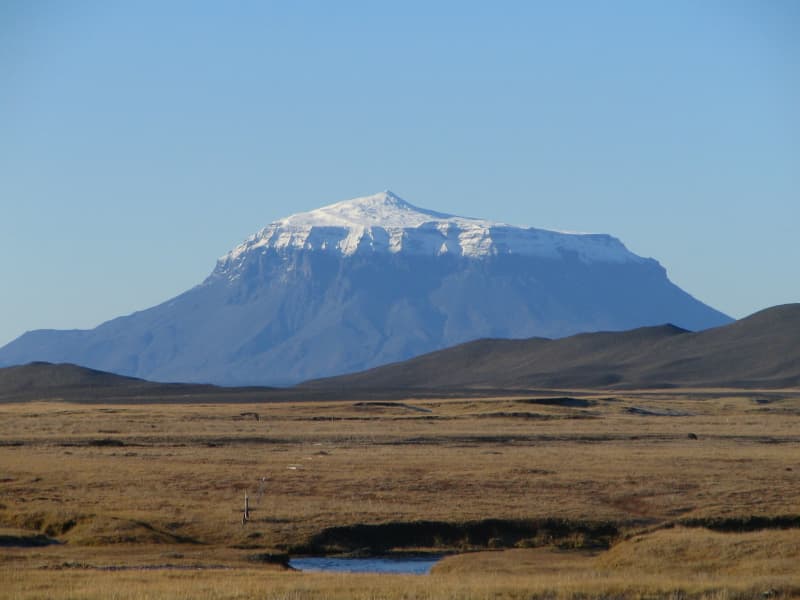
At an altitude of 469 m, Möðrudalur farm lies higher than any other Icelandic farm. The remarkable, tiny church was built by the farmer himself, Jón Stefánsson, in 1949. The tourist services here operate year-round. Various trails have been marked through the area, which prides itself on wide panoramas and amazing silence. The majestic Mount Herðubreið, looming in the near distance, has long been referred to as the Queen of Icelandic Mountains, but its image was further cultivated in the last century by a self-made painter from Möðrudalur farm, Stefán Jónsson (Stórval).
View

Þrístapar
Thristapar and the last execution in Iceland 1830
Practically on the Ring Road in the northwestern region of Iceland is an interesting place called Þrístapar or Triple Hillocks. Although this part of the area is well known for its cone-like hillocks called Vatnsdalshólar (Water-valley-hillocks), most of the small hillocks are on the south side of the road. Hundreds (or some say thousands) of them are in a cluster called Vatnsdalshólar scattered over a five-square-kilometer area.
Þrístapar, on the other hand, which consists of three adjoining small hillocks, is on the north side of the road. Around them are only two or three other smaller ones.
On a cold day at the beginning of January in 1830, a double beheading took place at Þrístapar, when Agnes Magnúsdóttir and Friðrik Sigurðsson were executed. They had been sentenced to death for murdering Natan Ketilsson and Pétur Jónsson at the farm Illugastaðir, located on the west side of the Vatnsnes Peninsula. The slaying took place two years before in March 1828 and was quite brutal as both men were knocked through the skull with a hammer, stabbed multiple times, and burned when the farm was put to flames after the atrocity. As the district commissioner at the time of execution was of the opinion that vandalism was far too frequent in his jurisdiction, he decided to make the execution an example and a warning. After the beheading, the two heads were put on a stick-on top of Þrístapar for display, and the corpse buried in the field nearby.
This was the last execution in Iceland.An audio guide is available in English. Listen to it here: https://thristapar.newreality.is/
Will the pauper and abundant child Agnes become a historical celebrity?
Agnes Magnúsdóttir was, without doubt, a witty and intelligent woman but from the time she was born, underprivileged and poor. She was left at a farm and abundant by her mother at an early age and became a pauper living at the mercy of others. In her time she was hardly noticeable but had the drive and intelligence to crave for something more, to move up the social ladder. Ironically she is becoming one of the best-known persons from these parts of Iceland and might be on her way to gain international fame. Her story has received more attention after Hannah Kent published her debut historical novel Burial Rites in 2013 about Agnes and the event leading to her execution.
You can listen to a story from this event at the Arctic Coast Way site: https://www.arcticcoastway.is/en/stories/vatnsnes-1
View
Illugastaðir
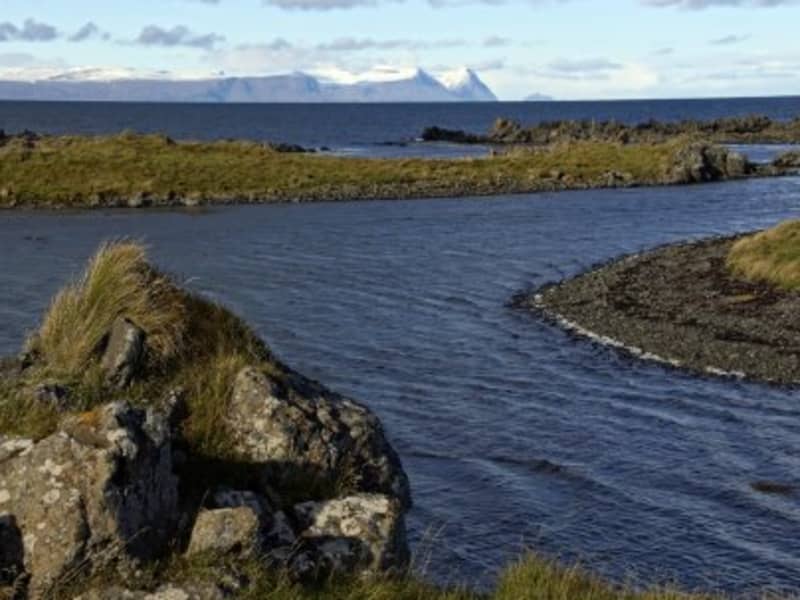
At Illugastaðir on Vatnsnes peninsula you find one of the best seal watching place in Iceland. There are good facilities and service for travellers. Good walking path is next to the ocean and a trail to the sealwatching place. There you also find nice sealwatching hut to stay in when the weather is bad. The seals stays at Illugastaðir most days of the year, laying in rocks or swimming in the ocean close to the shore.
Good camping site is at Illugastaðir and perfect place for walking in the nature. All kind of bird do nest at Illugastaðir, and large numbers of Arctic tern and eider ducks.
Attention! Because of the large number of eider ducks that nest at Illugastaðir in the spring, the area is closed for all visitors from 1st of May until 20 June every year.
View
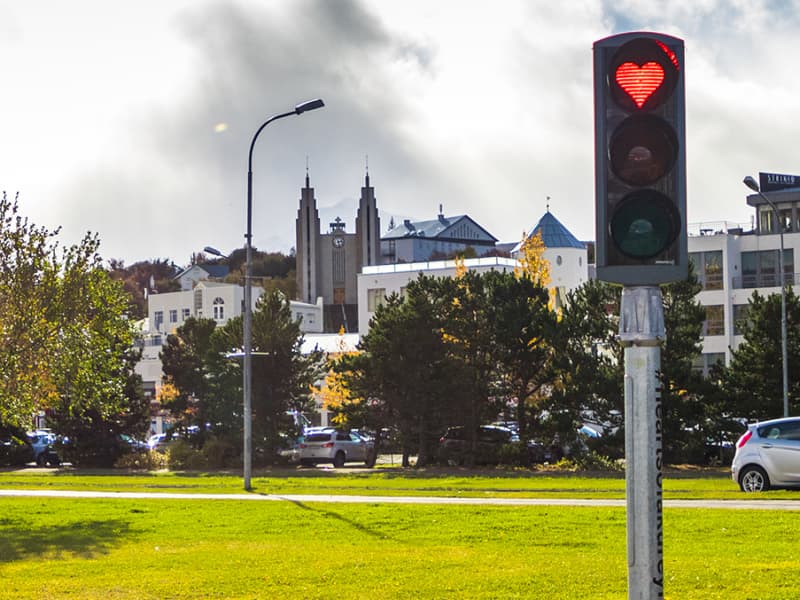
Hearts of Akureyri
In Akureyri, stopping at a red light is much more pleasant than elsewhere.
The red lights are heart-shaped!
The hearts in the traffic lights have caught the attention of visitors to Akureyri and the hearts of the locals.
The hearts lit up all over town just months before the financial crash in Iceland in 2008, and in the aftermath of the crash, these hearts became symbolic, as there was a need for some positive thinking and to emphasise what really matters.
Since then, the red hearts in the traffic lights are visible as well as plenty of red hearts made of the flower “forget me not” decorating windows, cars and signs throughout the town.
A perfect place for a selfie with the red traffic light always glowing, is down by the harbor in the city center close to Hof Cultural house.
Use the hashtag #heartsofakureyri
View
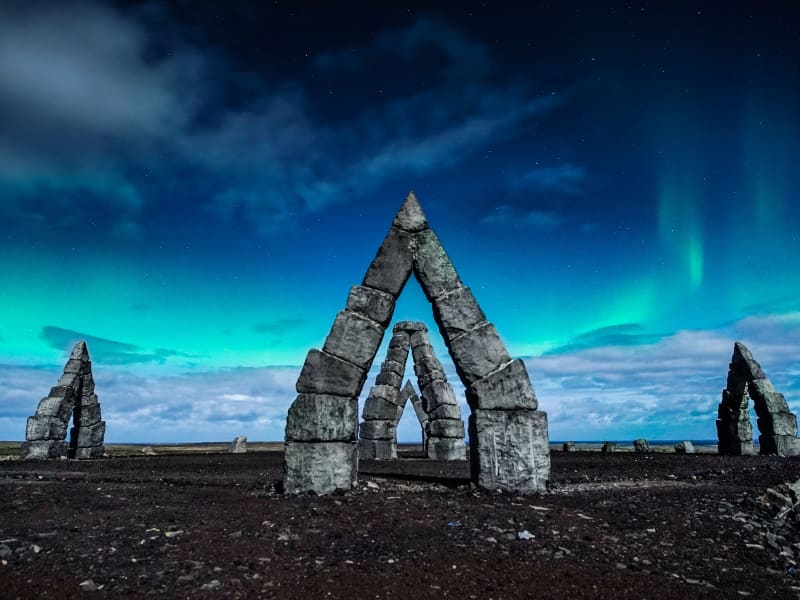
Arctic Henge
Located in Raufarhöfn, one of Iceland’s northernmost villages, the Arctic Henge (Heimskautsgerðið) is a unique monument inspired by Norse mythology, astronomy and the dramatic light of the Arctic. Often compared to Stonehenge, the structure is designed to interact with the sun, casting light and shadows through its aligned gateways throughout the year.
The idea for the Arctic Henge was developed by local visionary Erlingur Thoroddsen and later designed by artist Haukur Halldórsson. Inspired by the dwarf names found in the Eddic poem Völuspá, the monument combines ancient mythology with modern artistic interpretation, creating a symbolic calendar connected to the seasons and the passage of time.
Perched on a hill overlooking Raufarhöfn, the Arctic Henge offers expansive views of the surrounding landscape and the Arctic Ocean. Its geometry, gateways and stone structures create ever-changing patterns of light, particularly during the midnight sun and the long twilight hours of the north. As construction continues, the Arctic Henge remains one of Iceland’s most intriguing and distinctive cultural landmarks.
For more information about the Arctic Henge and the vision behind this unique monument, visit arctichenge.com .
Getting There
The Arctic Henge is located on a hill overlooking the village of Raufarhöfn in Northeast Iceland. The site is easily accessible by road and is approximately 130 km from Húsavík
Once in Raufarhöfn, the monument is clearly visible above the village. Visitors can either drive up to the site or enjoy a short walk to the monument while taking in the surrounding views.
View
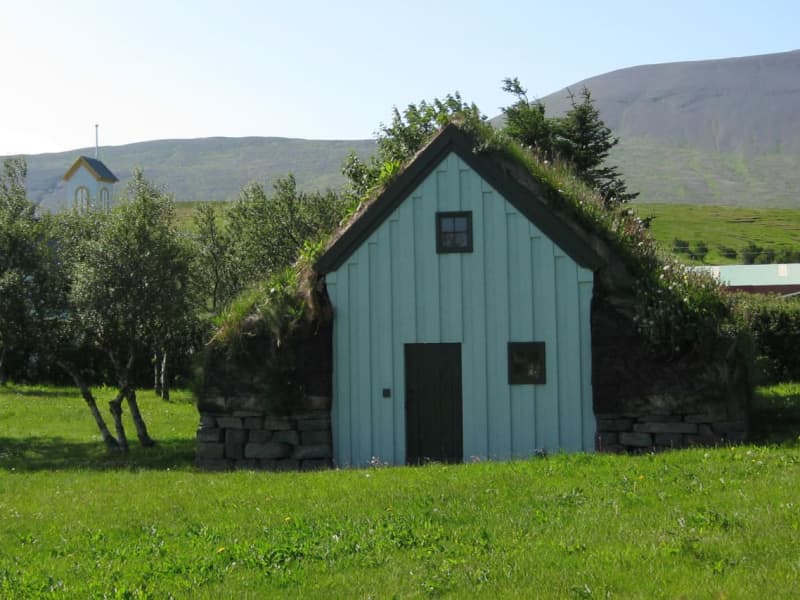
Reynistaður
At Reynistaður in Skagafjörður fjord an entrance hall is all that remains of the large farm that Þóra Björnsdóttir had built after a great fire in 1758. This building is one of the few existing examples of a timber frame from the 18th century. Open daily from 8-18, with no entry fee and no service.
View
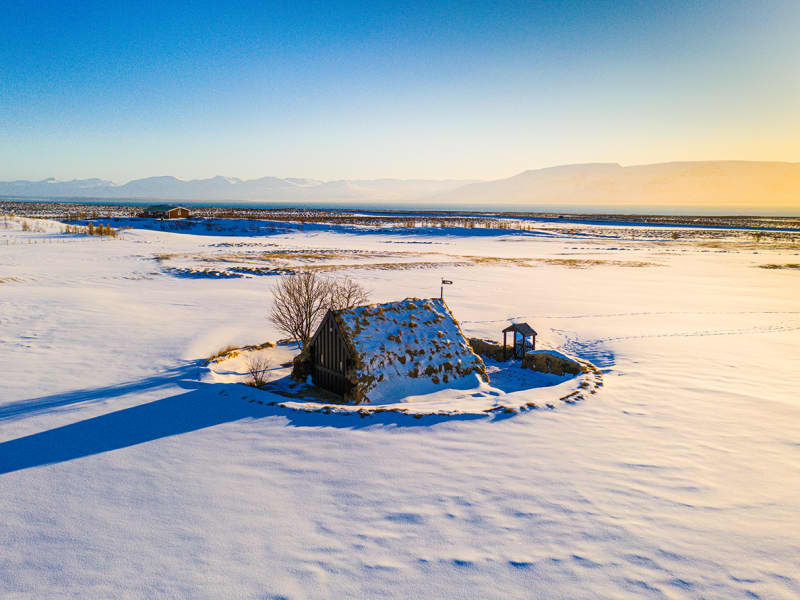
Chapel at Gröf
Grafarkirkja is a small chapel built by Gísli Þorláksson, bishop of Hólar in the late 17th century. The church is believed to be the work of a well-known wood carver of the time, Guðmundur Guðmundsson, whose baroque carvings can be seen on the altar and verge boards.
The Church is closed to visitors.
Grafarkirkja is a small chapel built by Gísli Þorláksson, bishop of Hólar in the late 17th century. The church is believed to be the work of a well-known wood carver of the time, Guðmundur Guðmundsson, whose baroque carvings can be seen on the altar and verge boards. The church was deconsecrated in 1765. The National Museum of Iceland had it entirely rebuilt in its original form in 1953. The graveyard is circular, an ancient form. The farm buildings at Gröf formerly stood on a hill north of the church. The church was built in 1884, and was the last turf church built in the old style. It is one of six churches still standing, which are preserved as historical monuments. The church is maintained by the National Museum but also serves as a parish church. The church was built by the carpenter Páll Pálsson. The lock and hinges of the church door were made by Þorsteinn Gissurarson, called „tool”, who was a well-known blacksmith. The water tub he used to cool hot iron can be seen south of the churchyard.
View
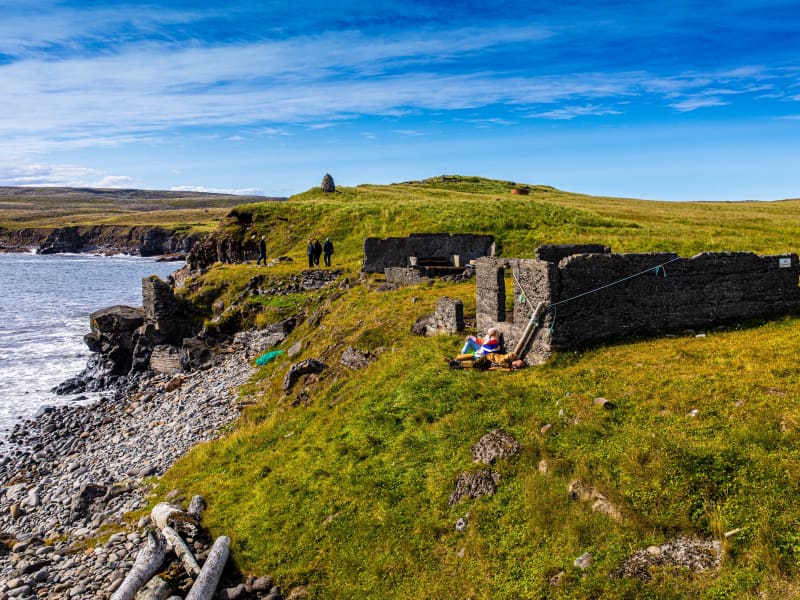
Skalar in Langanes peninsula
What remains of the village of Skálar are remnants of a life that used to be: a thriving community whose livelihood depended on the sea. Changing conditions in the fishing industry and transportation, the explosions of maritime mines, and other factor led to the abandonment of the settlement in the 1950s. Interwined with the village´s history are the factors that made Skálar an appealing place to live, its role in World War II, changes in transportation, the lives of individual families, and much more.
Some of the ruins have been marked with a number and name.
View
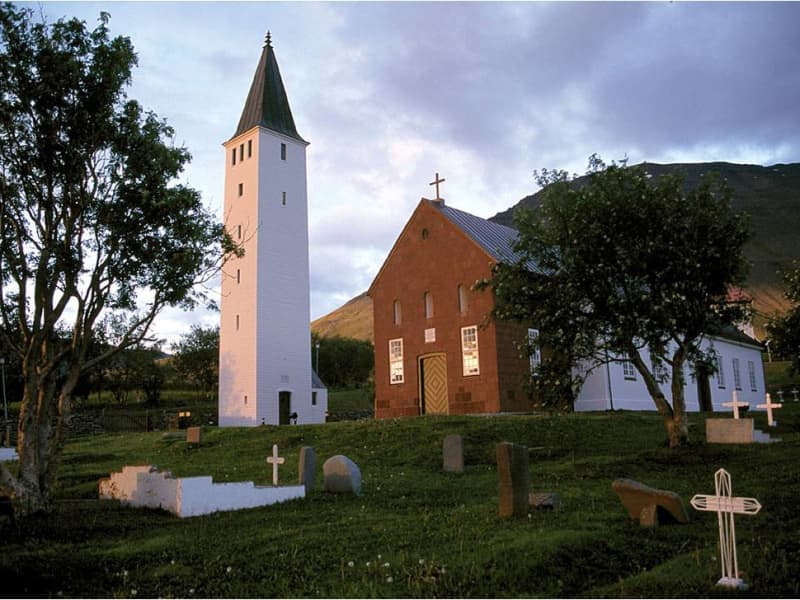
Hólar Cathedral
Hólar Cathedral is the oldest stone church in Iceland, constructed in 1763. The church is built with red sandstone from the mountain Hólabyrða. A number of historically important items are on display at the church.
The church tower is 27m long and stands beside the church. It was constructed on the 400-year anniversary of the death of the last Catholic Bishop of Iceland, Jón Arason.
View
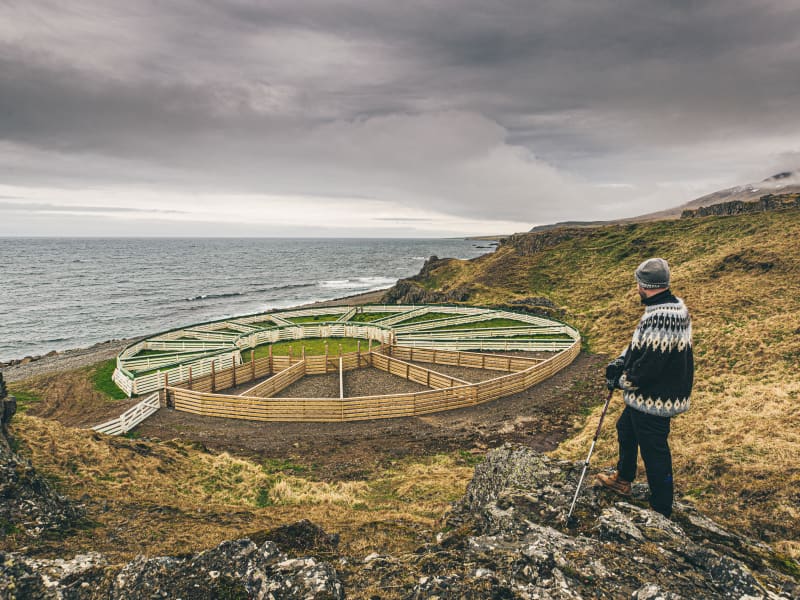
Hamarsrétt sheep fold
The Hamarsrétt sheep fold has a unique location where it stands on the beach on western Vatnsnes peninsula. The sheep fold is used in the autumn when farmers on the peninsula sort the sheep they herd from the mountain. South of Hamarsrétt is Kallhamar cliff, which name can be translated as "cliff of calling". The cliff got the title as in the old days it was used frequently to send messages or signals to nearby boats.
South of the cliff one can find the remnants of the fishermen's camp. North of the fold you will find the local community center Hamarsbúð.
View
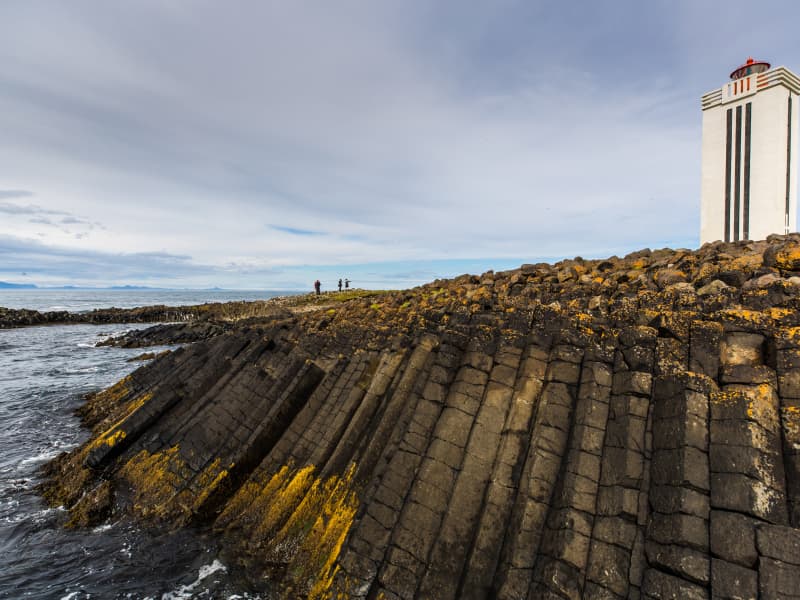
Kálfshamarsvík
Kálfshamarsvík is a small cove on the northern coast of the Skagi Peninsula, a short drive north of Skagaströnd. Renowned for its striking basalt columns and dramatic coastal scenery, it is home to one of North Iceland’s most distinctive geological formations. Created by volcanic activity around two million years ago, the beautifully shaped rock formations extend into the sea, creating a remarkable natural landmark.
The area offers spectacular views of the rugged coastline and the North Atlantic Ocean, making it a rewarding stop for those exploring the more remote parts of the region. The unique geological formations and peaceful surroundings attract visitors seeking both natural beauty and tranquillity.
Kálfshamarsvík also has an interesting history. In the early 20th century, the cove was home to a thriving fishing community of around 100 residents. By the 1940s, however, the settlement had been abandoned, leaving behind traces of a once vibrant coastal community. .
View
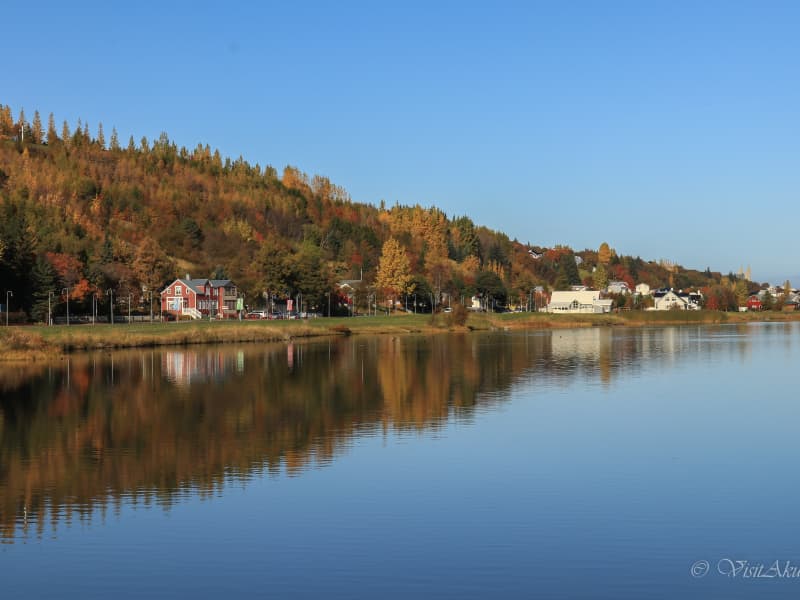
Akureyri Old Town
The old town of Akureyri brings you back to the beginning of the town. The area is located just a short stroll from town centre, towards the south. The area is a monument to the town‘s history and culture. Many of the town oldest houses have been preserved and the original street planning has been maintained. Informative signposts guide visitors about the history of a different era. On this walk, you see the old Theatre, the old Primary School and the Old Hospital built in 1827, the firsttwo-storied house built in Iceland and the oldest building in Akureyri, Laxdalshús, built in 1795.
The name of Akureyri dates back to the 15th century, but it was not until 1778 that the first dwelling was built on the site. The oldest building that still remains was built in 1795, called Laxdalshús. The houses and style of architecture are what draws the attention in this area. Around what used to be the main harbour but now home to the local sailing club Nökkvi you find many of the original buildings that kicked off this small harbour town. As time passed and the population grew, the hills behind the town developed as there was only one way to go – up!Many of the buildings feature coting of corrugated iron. Traditionally this was used as a roofing material and for building farming sheds but in Iceland, it was commonly used as an external covering on walls to protect the woodwork. Anothermethod of shielding houses that is quite special for Akureyri, as it is rarely found in other places in Iceland, is the use of pressed iron plates, like tiles. These were imported from the US in the 1930s, and many of the oldest houses still wear this type of coating with beautiful colours.
For more information about the old town and the houses see our historical signboards.
https://www.visitakureyri.is/en/see-and-do/culture/skilti-baejarins
View
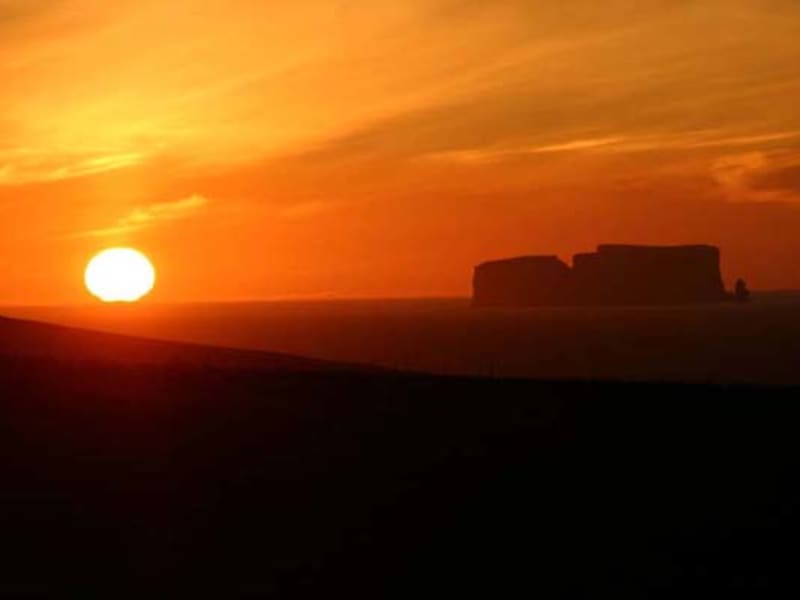
Drangey
Drangey is a striking rocky island rising nearly 200 metres from the waters of Skagafjörður fjord and is one of the region’s most recognisable landmarks. Formed of volcanic tuff, the island’s steep cliffs and flat summit create a dramatic silhouette that has fascinated visitors for centuries.
The towering sea cliffs provide nesting grounds for large numbers of seabirds, making Drangey an important bird habitat and a popular destination for nature enthusiasts. For generations, local people travelled to the island to collect eggs and harvest seabirds, traditions that played an important role in the region’s history.
Drangey is also closely linked to Grettir’s Saga, one of Iceland’s most famous medieval stories. According to the saga, Grettir Ásmundarson and his brother Illugi lived on the island for three years before meeting their fate there.
The island can only be accessed at one landing site, and during summer guided boat trips with Drangey Tours offer visitors the opportunity to experience its nature, history and spectacular views of Skagafjörður.
View